
Serious Injuries and Fatalities Prevention: A Complete Guide
In 2024, 5,070 workers in the United States lost their lives to work-related injuries, according to the Bureau of Labor Statistics. That is one worker every 104 minutes. Many more suffered injuries that changed the course of their lives.
While total recordable incident rates, also known as SIFs, have steadily declined in recent years, serious injury and fatality rates have plateaued, showing that traditional safety frameworks are not enough to combat serious harm. Organizations need a way to understand where serious injuries and fatalities could occur, long before an incident happens.
Organizations that proactively work to identify, control and measure exposures leading to serious harm are far better positioned to protect their people before tragedy strikes. This guide is designed to help EHS leaders do exactly that by exploring how to better identify, measure and reduce the conditions that lead to the most serious outcomes.
What Are Serious Injuries and Fatalities (SIFs)?
A serious injury or fatality (SIF) refers to a work-related incident that results in loss of life or a permanently life‑altering or life-threatening injury. These can include fatalities, amputations, permanent disability, severe burns or other injuries resulting in permanent loss of function. In some regions and industries, SIFs may also be referred to as High-Potential Incidents (HiPos) or Fatal & Serious Injury (FSI).
Note: While the terminology may differ by region, the situation remains the same. Prevention of critical injuries is what every organization is striving for. For simplicity sake, we’ll use the term “SIF” for the rest of the page, recognizing that your organization may be used to using a different term.
Serious injuries and fatalities occur when exposures with SIF potential create the conditions for or result in serious harm. An exposure is said to have SIF potential when the absence of a direct control could lead to a potential or actual SIF.
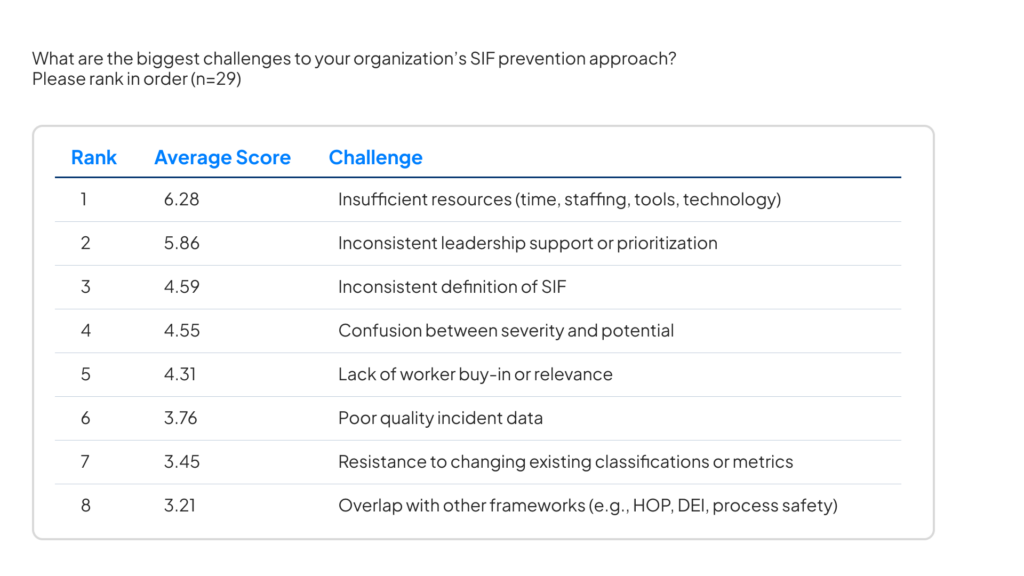
However, the qualifications of what constitute a SIF, as well as SIF exposure potential, vary across industries and even within organizations. SIF classification often relies on human judgement, creating a grey area around certain exposures and injuries. This has been cited as one of the top barriers to SIF prevention, according to the 2026 Risk Recalibrated report by Evotix and the What Works Institute.
SIFs can happen anywhere, at any time. A company does not need a recent fatality to be at risk. In fact, the absence of recent events can often create a false sense of security. By understanding how serious incidents develop, organizations can focus their time and resources on the exposures most likely to cause life‑altering harm. This foundation sets the stage for an honest question many safety leaders grapple with: are all serious incidents truly preventable?
Reality Check: Are All Serious Incidents Preventable?
The concept of whether all serious incidents are preventable is often debated among safety professionals. Those with an optimistic mindset will tell you yes, if you investigate an incident enough, you will find a moment where it was preventable. Put enough controls in place, and you wcan prevent all instances of life-changing harm. Others will counter saying no matter what guardrails you put in place, there is still bound to be a serious incident. You can’t plan for every incident.
On paper, the path toward total serious harm prevention may appear straightforward. In reality, the work is obviously easier said than done. Many EHS teams operate with limited budget, leadership support and workplace disfunctions, creating a challenging environment to champion life-saving safety programs.
However, it’s important to approach SIF prevention with the belief that all serious incidents could be preventable. If you carry that mindset, you will find yourself learning and evolving. Accepting SIFs as the norm cannot be acceptable. Every worker deserves to return home safe and sound, and with the advancements of SIF prevention efforts, that may one day be a reality.

At the core of the work that we do, we have to believe that all incidents are preventable. Every accident has a moment where it was preventable.

Catryna JacksonGlobal EHS Advisor at Evotix
Why Don’t Existing SIF Frameworks Work?
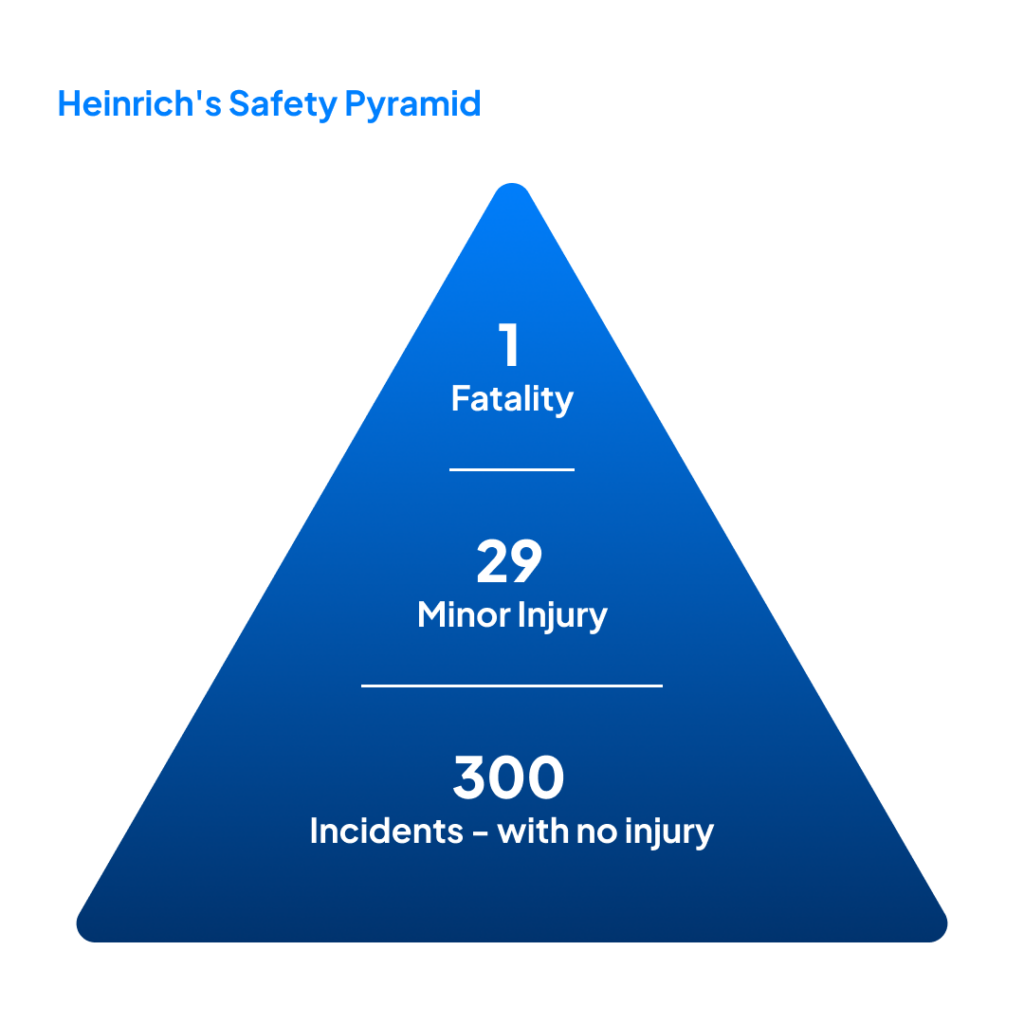
For decades, safety programs have been shaped by Heinrich’s safety pyramid. Herbert William Heinrich, an industrial safety pioneer, proposed that reducing minor incidents would proportionally reduce serious injuries and fatalities. In his model, for every 300 incidents that resulted in no injury or illness, 29 would result in minor injuries and 1 would result in a fatal event. The implication was clear: drive down small incidents and serious harm will follow.
While the intent behind this idea was sound, real‑world data has not supported the theory. If all incidents carried equal potential for fatal outcomes, reductions would occur across the board. Instead, organizations have seen steady drops in recordable injuries while fatalities and serious injuries decline far more slowly.
Heinrich’s model assumes that every incident sits on the same pathway to serious harm. In reality, not everything that hurts people can kill them. Only certain events and exposures have the potential to become life‑altering. Effective SIF prevention depends on identifying and learning from those specific signals, not counting every exposure equally.
Barriers and Solutions to Serious Harm Prevention
- Barrier #1: Limitations of Lagging Indicators
Traditional safety measurements rely heavily on historical outcomes. Total recordable injuries, past incidents and investigation data dominate dashboards and executive reporting. While these metrics have value, they tell a limited story. They explain what already happened, not where the next serious injury or fatality is likely to occur.
Injury rates often create a false sense of security. An organization can report a low number of SIFs while workers continue to face exposures capable of causing fatal harm. When leaders focus only on TRIR or similar metrics, they see a partial picture that excludes many of the most critical risks.
Preventing serious harm requires a fundamental shift from measuring outcomes to measuring exposure and risk. The question is no longer just how many people were hurt, but where conditions exist that could result in life‑altering harm. Lagging safety indicators still matter, but they should be understood in context. These include:
- Actual serious injuries and fatalities
- Severe injuries and catastrophic near misses
- Total percentage of SIF exposure
- Total recordable incident rate (TRIR)
- Lost time injury frequency rate (LTIFR)
- Solution: Focus on Leading Indicators That Surface SIF Risk
Organizations that take SIF prevention seriously place greater emphasis on leading indicators, particularly those tied directly to exposure and control effectiveness. Examples include:
- Events and near misses with SIF potential
- Failures or degradation of critical controls
- Percentage of complete corrective actions
- Quality and frequency of risk assessments
- Exposure to high‑risk or high‑energy work
- Repeat patterns in known SIF precursors
A lot of organizations are tracking incident rates. The problem with that is it’s not true indication of risk. I think a more balanced approach now is to start looking at how we bring in the leading measures, so the things that we are doing as an organization to reduce that risk and then seeing how that all reflects in those lagging metrics. It’s important to see if what we are doing as a organization is actually having an impact and a reduction on risk and incidents in the long run.

Mike SwainTechnical Enablement Manager at Evotix
- Barrier #2: Unclear Ownership of Responsibility
Ownership of SIF identification lies with each individual who works in that environment. Safety professionals have the responsibility to make workers aware of any and all workplace risks. Workers must also be responsible for protecting themselves while engaging in work. If you know that you’re exposed, then you must have ownership for your own safety.
This shared responsibility often results in a presumption of ownership for specific processes. If ownership is not clearly defined, it is unlikely that someone will fully take accountability.
- Solution: Define Responsibilities
Clear ownership over critical work processes answers basic but essential questions:
- Who confirms critical controls are in place before work begins?
- Who is accountable when a critical control is missing, degraded or bypassed?
- Who has the authority to delay or stop work if SIF risk is not adequately managed?
- Who ensures contractors are properly checked in and trained?
- Who verifies permits are complete?
Ownership only works if it is visible and verified. Publish these responsibilities where work is planned, add them to start‑work checks and review them after potentially serious events.
- Barrier #3: Reactive Practices
Many organizations are shaped by reactive safety practices. Controls and improvements are often put in place only after a near miss, injury or fatality. When serious events are rare, there can be little urgency to challenge existing practices. Safety efforts become focused on preventing the last incident instead of anticipating the next high‑consequence exposure.
- Solution: Adopt a “Starting When Safe” Mindset
A “starting when safe” mindset reinforces the importance of preparation. It requires that hazards are understood, controls are verified and roles are clear before work begins.
- Barrier #4: Familiarity Breeds Comfort
A recent study showed that 77.1% of car crashes happen within 10 miles of the victim’s home. This study suggests that the closer to home the driver is, the more they relax and become overconfident. Their familiarity with the route leads to a dangerous sense of comfort.
This is what many EHS professionals refer to as the paradox of safety: when workplaces feel safe, employees let their guard down and engage in behaviors that have a higher chance of leading to a workplace incident.
- Solution: Establish Ongoing SIF Awareness Campaigns
A strong solution to overconfidence is to build routine risk awareness into daily work. This can include regular refreshers on high‑risk tasks, quick safety conversations before starting work and frontline involvement in identifying exposures.
Encouraging workers to pause and reassess familiar tasks helps reset their awareness and ensures they recognize the high‑energy hazards that remain present even when the job feels routine.
- Barrier #5: Even The Best Employees Make Mistakes
Traditional safety approaches often place an overreliance on perfect performance. But even skilled, experienced employees can make mistakes, especially in complex systems that rely too heavily on human perfection. In fact, organizations should plan for it.
Workers actions are influenced by the work conditions, pressures and stress they face. Understanding the impact of these influences requires a human-centric approach to safety.
- Solution: Understand How to Fail Safely
Human error is inevitable. Organizations that plan for perfect performance are planning for failure. Zero‑tolerance approaches to failure often create fear rather than safety.
Resilient organizations accept that mistakes will occur and design systems that limit the consequences of those mistakes.
To design controls based around how workers actually think, feel and function, begin by asking:
- What production pressures, time constraints or competing priorities are present?
- Do workers feel comfortable stopping work or raising concerns beforehand?
- What psychosocial risks are present that could affect job performance?
- How might different backgrounds and experience levels impact the way workers interpret risk?
- Barrier #6: Normalization of Deviance
When small shortcuts, temporary fixes and procedural drift become accepted as “how work really gets done,” the potential for serious harm increases. Because nothing bad happens right away, these deviations feel safe. This is what safety professionals call the normalization of deviance.
- Solution: Reestablish Acceptable Work
Rebuild vigilance and reinforce what acceptable work looks like through leadership action and workforce involvement. Regularly discussing near misses, refreshing expectations for critical procedures and coaching supervisors to model compliant behaviors helps re-establish boundaries around acceptable work.
Committed safety leadership, empowerment and accountability act as cultural defenses against normalized drift.
When risk is normalized, that is your highest warning sign of a serious incident. When you’re surrounded by the risk so often that it’s not something that you are paying attention to, you’re not as attentive. It’s just normal. The risk is normal.
Catryna JacksonGlobal EHS Advisor at Evotix
Preventing Serious Harm: Taking a Proactive Approach
Effective SIF prevention relies on a structured approach that helps organizations understand why serious incidents happen and how to stop them. The early stages of this process tend to be reactive, focusing on what occurred and which conditions allowed a serious outcome to unfold. To meaningfully reduce SIF risk, however, organizations must shift toward proactive methods that identify hazardous conditions and weak signals before they escalate into serious harm.
1. Establish SIF Criteria
The first step to better SIF prevention is for organizations to define their own criteria for SIF potential exposures and resulting injuries or illnesses. Although universal criteria would help streamline industrywide efforts, the most critical step is establishing clear, consistent classifications within your own organization. Without shared definitions, teams cannot reliably identify SIF exposures or compare risk across sites, which makes meaningful prevention nearly impossible.
Most serious incidents stem from a predictable set of high‑energy hazards:
- Biological
- Chemical and radiation, including hazardous substances or environments with delayed health impacts
- Electrical
- Gravity, including falls from height and suspended load
- Mechanical motion, including caught‑in or caught‑between hazards involving moving or energized equipment
- Motion, including vehicle and mobile equipment interactions
- Noise
- Pressure, including excavation cave-in and flying projectiles
- Temperature, including radiation or environmental
When these classifications are well defined, teams can more accurately determine if an incident qualifies as a SIF or potential SIF. This can be done through a SIF decision tree or through a judgement-based review based on the pre-determined qualifications.
2. Identify SIF Precursors
In every serious incident there is some sort of precursor, or contributing factor that led to the event happening. Common SIF exposure precursors include but are not limited to:
- Missing or inadequate safeguards
- Bypassed controls
- Incomplete or expired permits
- Deviations from planned work routes or sequences
- Contractors unfamiliar with site hazards
- Fatigue and production‑driven shortcuts
- Incomplete lockout or tagout
- Informal workarounds
- Poor shift handoffs or communication gaps
- Critical controls that are not verified
SIF precursors offer one of the most crucial opportunities for proactive prevention. When organizations can identify early warning signs and implement targeted controls before work begins, they significantly reduce the likelihood that a precursor will escalate into a serious incident.
Not all precursors stem from physical work conditions or task design. Some originate from organizational culture, workload pressures or psychological factors that influence how work is carried out. Stress, fatigue, unclear expectations, strained communication or a culture that rewards speed over safety can all contribute to decisions that increase SIF exposure. These human and organizational elements must be evaluated alongside procedural failures because they often shape why workers take shortcuts or why controls break down in the first place.
To identify all related precursors, conduct a thorough incident investigation to evaluate what high-risk event occurred, what controls were missing, bypassed or inefficient, and what organizational factors led to the SIF occurrence.
3. Determine Corrective Actions and Preventative Actions
Implementing strong, reliable controls is central to preventing SIFs. Corrective and preventive actions should be selected using the hierarchy of controls, which prioritizes the most effective ways to eliminate or reduce SIF exposure.
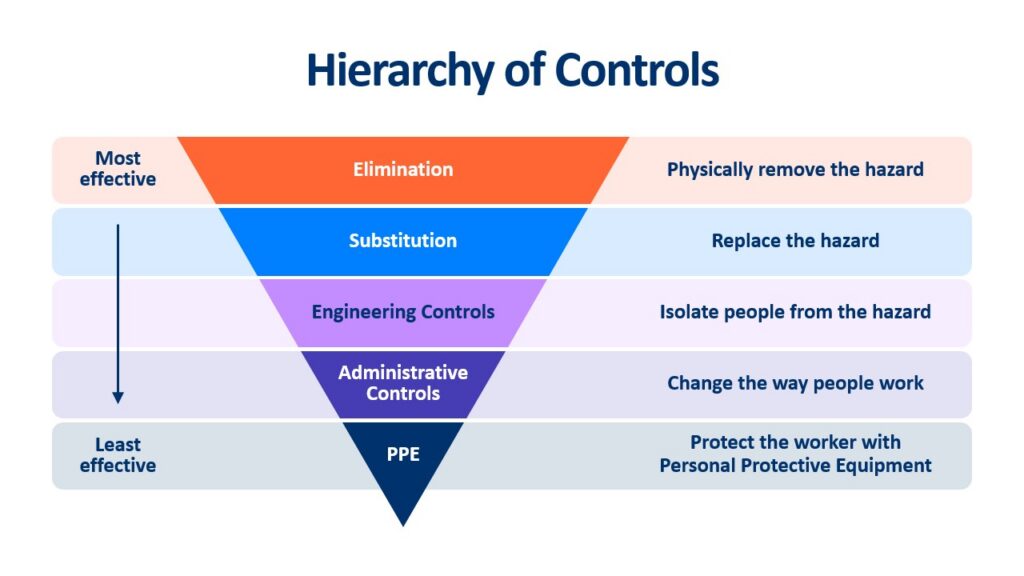
Using this hierarchy helps guide the selection of critical controls: any prevention tool that “must be in place and functioning 100% of the time, without fail, to protect people when working in SIF exposure situations.”
To determine the most effective critical controls for any given exposure, begin by asking:
- What controls can be put in place: What safeguards are missing that will control risk exposure? Examples include lockout/tagout systems, PPE, ergonomics support, harnesses, deenergizing requirements, sign-ins/sign-out.
- How will controls be administered: Will controls be administrative, engineered or both? What communication, equipment or software is required to implement these controls?
- How will controls be verified: Will controls be able to be bypassed or ignored?
- What are the permits and certifications, and training requirements: How can you ensure worker qualifications?
- How often should controls be reassessed: What is the likelihood of a malfunction or failure?
- Are there laws, regulations and policies to comply with: Do workplace standards, conditions and processes meet the necessary regulation requirements?
If no prevention tools already exist to address the SIF exposure within the organization, new controls must be established.
4. Assess Controls
Once controls are in place, organizations must consistently verify that they work as intended. This requires assessing not only whether controls exist, but whether they are reliable, understood and used in real working conditions. A control that looks effective on paper but is routinely bypassed, degraded or misunderstood offers little protection against serious harm.
After an incident and before work begins, field leaders should review relevant critical controls during pre‑task risk assessments to confirm they match the actual conditions workers will encounter. During operations, supervisors and front‑line leaders can use critical control checklists to observe work, validate that controls are functioning and pause work if any safeguard is compromised.
While these practices are often applied after an incident, they become far more powerful when used proactively. Regular verification ensures that controls evolve with the work, remain reliable and prevent breakdowns that could lead to SIFs.
5. Proactively Identify SIF Exposures
Up to this point, much of the discussion has focused on understanding how serious incidents occur and evaluating controls after exposure has already been identified. Modern SIF prevention requires shifting from that reactive lens to a proactive mindset that looks for early indicators of risk long before harm occurs.
A proactive framework depends on learning from events where serious harm could have occurred but didn’t. These potential SIFs contain valuable insights because they reveal the same underlying exposures found in actual SIF events, without the devastating outcome.
6. Harness Potential SIFs
A potential SIF (PSIF) is a situation where the outcome was less severe, but the exposure was capable of causing catastrophic harm.
A practical way to assess if something has SIF potential is to ask: “If this situation occurred repeatedly, is it reasonable to believe that one of those repetitions could eventually lead to a fatal or life‑changing outcome?”
If the answer is yes, the situation should be considered to have SIF potential, even if the actual outcome was minor or resulted in no injury at all. Organizations that lead their SIF prevention strategy with insights gained from PSIF investigations are far better positioned to proactively identify SIF exposures and stop serious harm from occurring.
The Role of Comprehensive SIF Prevention Tools
SIF awareness depends on visibility. Disconnected systems make it difficult to see patterns, track precursors or verify whether critical controls are working. When data lives in silos, serious risk hides in the gaps.
Connected EHS systems and risk management software enable organizations to link incidents, near misses, risk assessments, controls and corrective actions in one place. This allows teams to:
- Identify repeat precursors
- Monitor control effectiveness
- Prioritize resources based on exposure
Organizations cannot learn from what they do not see, and visibility depends on frontline participation. Digital tools encourage worker engagement by making the following documentation easily available:
- Risk assessments
- Hazard identification
- Incident reporting
What the Research Tells Us
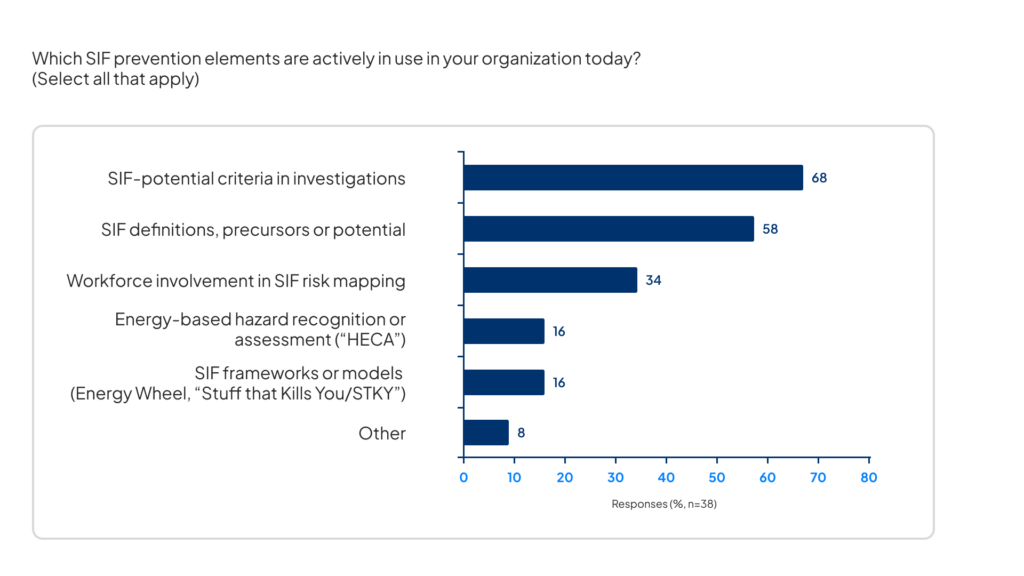
With organizations ranking SIF exposure tracking as the highest priority focus area in 2026, it’s clear that now is the time to act. Research from Evotix and the What Works Institute shows that most organizations recognize the importance of SIF prevention and are acting on it.
Nearly 70% are actively incorporating SIF-potential criteria in incident investigation, while 58% are using clear SIF definitions, precursors and SIF potential to proactively identify serious risk.
Organizations are also placing greater emphasis on learning and awareness. Survey participants cite that real‑world examples of serious incidents, localized case studies and site‑specific discussions are increasingly used to make SIF risk tangible. These respondents also reported a correlation between increased understanding of SIF concepts in senior leadership and better aligned prevention strategies. Another company’s breakthrough in SIF prevention credits a critical control assurance program that requires evidence of control effectiveness.
Conclusion
The debate about whether all serious incidents are preventable will continue, but the research points to a useful middle ground. Treat preventability as a working assumption and build systems that make failure less harmful. When leaders act on PSIF signals, verify critical controls and learn from real work, organizations increase their capacity to prevent, contain and recover. You may never eliminate uncertainty, but you can eliminate the unexpected.
Explore Deeper - SIF Resources from Evotix
Below are some helpful resources for building SIF prevention within your organization:
- Foundations
- Measurement
- Prevention
- Leadership
- Operational tools
Glossary
High-Risk Work: Work that involves significant energy sources or hazardous conditions capable of causing serious injury or fatality if controls fail.
Potential Serious Injury or Fatality Incident (PSIF): An incident or exposure where the actual outcome was minor, but the conditions could have reasonably resulted in a serious injury or fatality.
SIF Decision Tree: A structured set of questions used to consistently determine whether an incident or exposure has serious injury or fatality potential. Typically centered around high-risk work.
SIF Exposure Potential: The total number of actual and potential SIF events that indicate where workers could be exposed to life‑altering harm.
SIF Precursor: A high‑risk scenario where controls are missing, ineffective or not followed, and which could lead to a serious injury or fatality if allowed to continue.
SIF Prevention Framework: A structured process for identifying serious risks, applying effective controls and continuously monitoring conditions to prevent serious injuries and fatalities.
Table of Contents