AI in EHS: Smarter Tools, Safer People
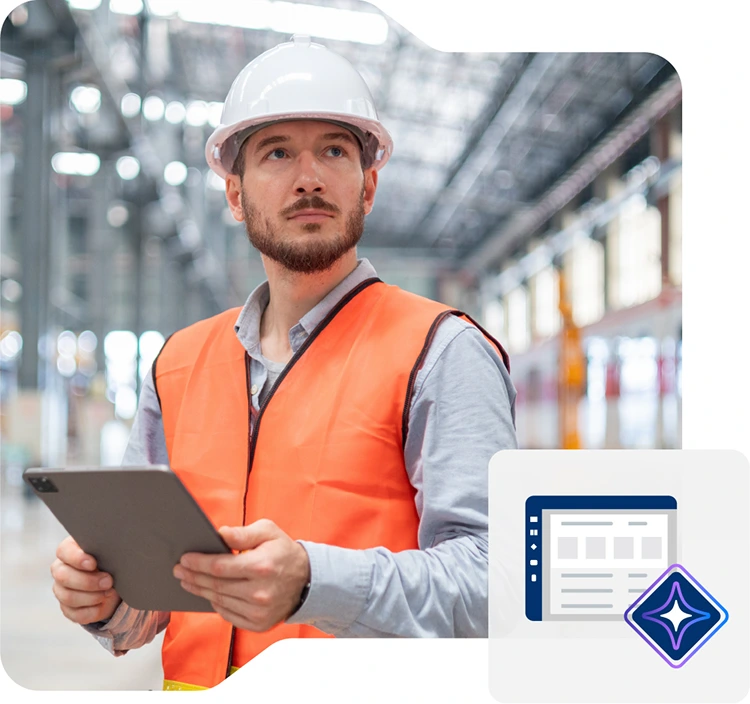
What AI really means for EHS
A smarter way to keep people safe
Implementing AI in workplace safety helps you work smarter with the data you already have.
With AI, you can identify trends faster, understand what’s happening across your operations and make decisions based on real patterns instead of guesswork. AI handles the analysis so you can spend your time on what actually matters: practicing your craft, reducing risk and keeping people safe.

Incident reporting & classification

Hazard spotting & image recognition

Auditing & inspections

Predictive analytics

Smart sensors & connected safety

AI-assisted monitoring in hazardous environments

Document & evidence extraction

Cross-module pattern detection
Evotix’s guiding principles for AI in EHS
8 principles guide our strategy when building AI capabilities:
- Purposeful innovation
- Responsible deployment
- Transparency and explainability
- Human-centered design
- Continuous monitoring and improvement
- Measuring impact
- Collaboration and enablement
- Product integration
Answering your questions about AI in EHS
What is AI in EHS?
Artificial intelligence in EHS uses data analysis, pattern recognition and natural language processing to help safety teams identify risk faster, improve reporting accuracy and make more proactive decisions. AI supports health, safety and sustainability programs by turning complex information into clear, actionable insights.
How is AI used in health and safety?
AI is already helping EHS professionals automate reporting, detect hazards, analyze trends and predict risks before incidents occur. By applying machine learning and computer vision, AI tools can surface insights from inspections, audits and observations to strengthen safety performance. See Evotix solutions here.
Will AI replace my job?
No. Artificial intelligence is designed to support EHS professionals, not replace them. It automates repetitive tasks like data entry, reporting and compliance tracking so safety teams can focus on strategy, leadership and building stronger safety processes.
What if I don’t have enough data to benefit from AI?
You don’t need massive amounts of data to start seeing value. Many AI tools can work with the information you already have—like incident logs, inspection reports or audits—and deliver early insights and recommendations. As your data matures, the quality and precision of those insights improve.
Will AI put my company’s data at risk?
Not all AI tools are created equal. Evotix AI is powered by OpenAI Enterprise, which ensures your data is protected, encrypted, and used only to deliver your services. Your information is never used to train public AI models and is processed securely under SOC 2 compliance.
Will it be too complicated to adopt AI into our current system?
Adopting AI in health and safety can feel like a big step—but it’s manageable with the right approach. Start small, integrate with existing workflows and measure early wins. Most modern EHS platforms, including Evotix, are built to add AI functionality incrementally as your organization grows more confident.
Is AI safe for regulated industries like manufacturing or energy?
Yes. AI can actually strengthen compliance by helping teams detect hazards sooner, automate documentation and ensure consistent reporting across sites. When used responsibly, AI becomes a tool for proactive prevention—reducing risk, not adding to it. See the industries Evotix serves.