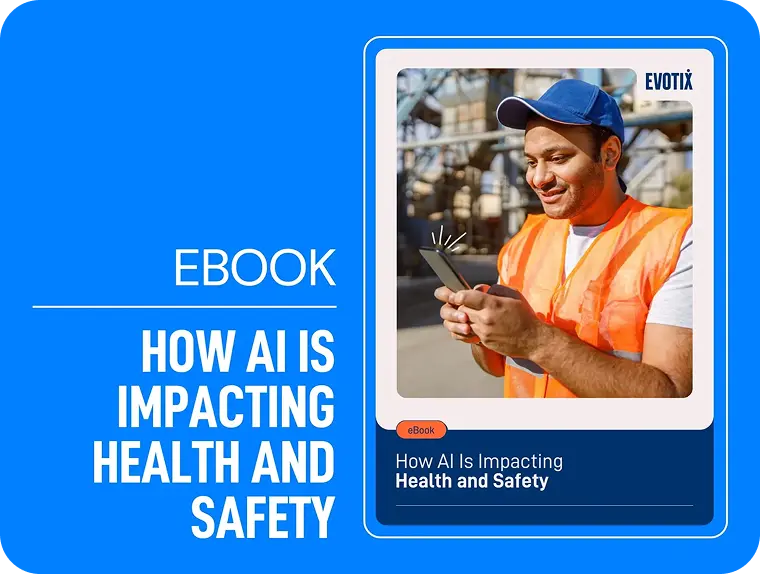
EBOOK | 15 MINUTE READ
How AI Is Impacting Health and Safety
Artificial Intelligence is transforming how high-risk industries approach workplace health and safety by enabling smarter decisions, proactive risk mitigation and streamlined compliance efforts. But many EHS leaders are still unsure what benefits AI can bring to health and safety processes.
In this guide, we’ll explore:
- How AI is influencing high-risk EHS&S industries
- How to leverage its expansion
- What to consider when taking the first step
Request your free guide
How Can Our EHS Team Benefit From AI?
Key industries, including manufacturing, energy & utilities, construction, mining, and oil & gas, are leveraging AI tools to:
- Predict and prevent workplace incidents using data from audits, inspections and sensors
- Guide smarter decision-making and enhance risk management with actionable suggestions
- Stay ahead with instant access to regulatory requirements and automate routine reporting tasks
- Enhance multilingual communication and image-based safety analysis
- Resolve persistent gaps in safety performance using historical data and trend analysis
- Uncover hidden risks, detect emerging trends, lead decision-making and prevent potential hazards before they happen
Ready to learn more?
Download our eBook to start your journey with AI.
Commonly Asked Questions About AI in EHS
Will AI replace our jobs?
AI is designed to support EHS professionals, not replace them. It automates repetitive, time-consuming tasks to free up time spent on strategic initiatives and areas that require human insight.
Do we have the right data for AI?
You don’t need massive amounts of data to start seeing value from AI. Many AI tools can begin working with the data you already have, such as past incidents, inspections or audit reports, and provide early insights and suggestions.
Do AI tools put company data at risk?
Not necessarily. Solutions powered by OpenAI Enterprise, for example, ensure that your data is protected and used exclusively for your benefit.
How complicated is it to adopt AI tools in our current system?
Adopting artificial intelligence in your health and safety processes may feel like a big step, but it’s achievable with a structured approach.