
Identifying workplace hazards is only the first step in managing risk. The real challenge is determining which controls will most effectively prevent an incident and making sure those controls remain effective long after implementation.
The Hierarchy of Controls provides a structured framework for workplace controls based on their effectiveness. Let’s explore more.
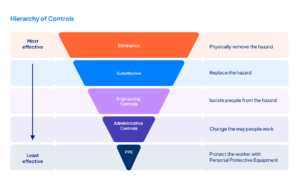
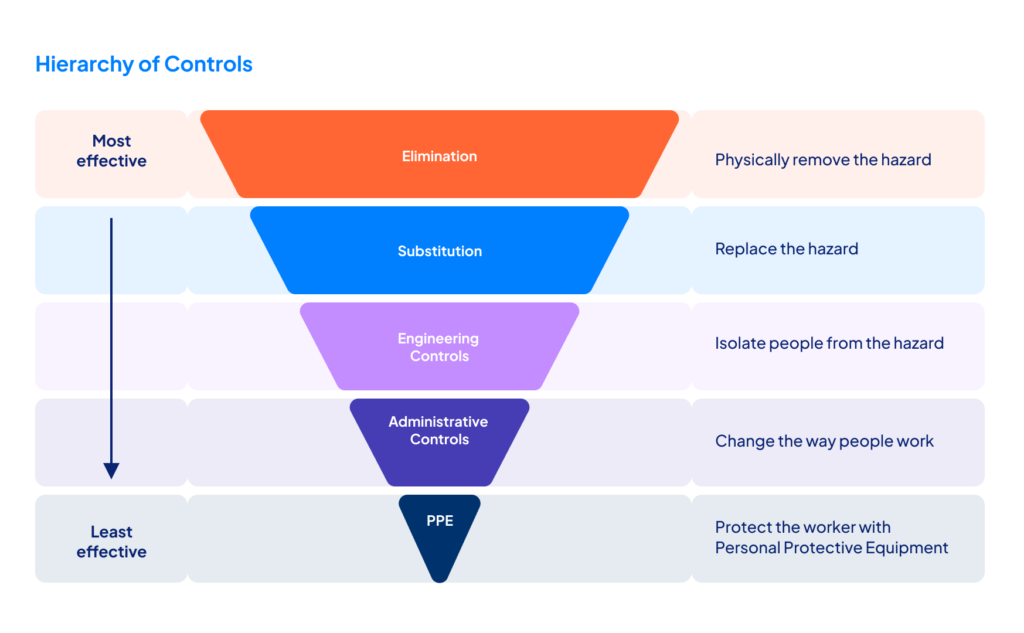
The Hierarchy of Controls (HOC), sometimes called the hierarchy of safety controls or hierarchy of risk management, lists the most effective ways to mitigate a workplace hazard, starting with the most effective means of control:
Structured this way, the hierarchy prioritizes eliminating a risk wherever reasonably practicable and minimizing what can’t be eliminated. Industry guidance backs this approach, with the INGAA reporting, “The identification of CAPAs that utilize controls in the top half of the HOC (i.e., engineering, substitution, or elimination) are more effective those in the bottom half (i.e., administrative or PPE) for controlling SIF exposures.”
To better understand how the hierarchy prioritizes controls, let’s look at an example of a fall-from-heights hazard. Using the Hierarchy of Controls, appropriate mitigative controls could look like the following:
Workplace risks that have an increased chance of leading to a serious injury, incident or fatality require critical controls to prevent these instances from occurring. Critical controls function as the best line of defense an organization has against harm, and the absence of critical controls leaves workers increasingly vulnerable. By prioritizing the most effective means of hazard prevention, this directly follows the level of prioritization outlined by the hierarchy.
Many industries have established regulations, standards, codes of practice and technical guidance that identify recognized control measures for common workplace hazards. Consulting the recognized organizations below can help determine what is considered reasonably practicable and demonstrate due diligence during audits, inspections and investigations:
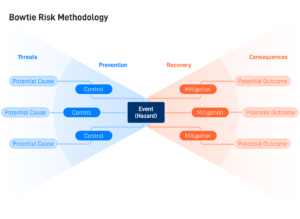
Remember, no single control should carry the full weight of protecting your workforce. Layer multiple controls so that if one fails, another is still in place, especially for risks that are known to cause serious injuries or fatalities. This is what planning for the worst-case scenario looks like in practice: assuming any one safeguard could fail and making sure another is there to catch it.
Implementing a control is only part of the process. Every control should be documented so workers understand what is required for safe work and leaders can verify that safeguards remain effective over time. At a minimum, organizations should document:
This information is commonly maintained within a risk register.
After controls have been implemented, their effectiveness should be evaluated regularly. Incident investigations, workplace inspections, audits, maintenance records and worker feedback can all reveal whether a control is functioning as intended. Controls should also be reviewed whenever:
The goal of risk management is not simply to comply with requirements, but to create multiple layers of protection that reduce the likelihood of workplace injuries, illnesses and serious incidents.
Want to learn more? For more information, consult our library of risk management resources:

Share