


Summary: Contractor safety management ensures that temporary workers operate under the same safety expectations as your direct workforce. It requires clear qualification standards, consistent onboarding, active oversight and continuous performance monitoring to reduce risk across job sites. Done well, it helps organizations meet global compliance requirements and maintain consistent EHS&S performance even as contractor usage grows.
Hiring skilled contractors to address workforce gaps is becoming increasingly common. However, as temporary team members, contractors often bring varying levels of skills, qualifications and experience that may not align with your core workforce. These differences can create challenges in maintaining consistent health and safety standards across your organization. This is where effective contractor safety management becomes essential.
Contractor safety management is a system of procedures that organizations follow to ensure that contractors, like full-time employees, remain safe and healthy.
Without a structured approach, even qualified contractors can introduce risk simply because they are unfamiliar with your processes, controls or reporting expectations. A strong contractor safety program closes that gap and keeps work aligned from day one through project completion.
Contractors don’t always have the same detailed knowledge of safety practices as the rest of an organization. Because of these key discrepancies, both contractors and the full-time employees become more vulnerable to workplace hazards.
By improving the safety of contractors and employees alike, companies can take significant steps toward their EHS goals.
Contractor safety management is an ongoing process that covers how contractors are selected, trained, monitored and evaluated throughout their lifecycle with your organization. This includes prequalification, site-specific onboarding, risk assessments and clear communication around responsibilities on site. It also requires coordination between host employers, contractors and subcontractors to ensure hazards are identified early and managed consistently. Other essential aspects of a good contractor safety program can include:
Across global regulations, employers are expected to protect anyone impacted by their operations, including contractors and subcontractors. While the wording varies by region, the expectation is consistent: organizations have a responsibility to assess risk, coordinate activities and maintain oversight of contractor work. The following are a few global regulations that state how organizations are required to manage contract employees:
Managing contractor safety is a considerable task, and it can be hard to know where to begin. Including these six steps will put you on the right track:
If a contractor’s skills don’t measure up, they pose a significant risk to themselves and your greater team.
In addition to determining the required qualifications, firms should assess the particular hazards associated with the jobs they’re outsourcing and ensure that safety management systems are in place to manage those hazards. By performing a thorough assessment of the skills, training, qualifications and hazards connected to the job, companies can ensure they’ve done everything in their power to mitigate the additional risks involved in hiring a contractor.
Before hiring a contractor, make an agreement detailing the duties and responsibilities of the position being outsourced. This agreement should clearly establish expectations of the contractor throughout their time in the role.
While your contractors must meet the qualifications required to perform their duties, it’s also important to provide them with additional training to make sure they can do the job as effectively as possible. Even if they have received relevant training prior to securing the job, you can’t be sure that training will be specifically applicable to your jobsite and the contractor’s exact role. Of course, this additional training doesn’t just apply to their ability to perform their job well; contractors need to understand the safety risks associated with their duties and how the company expects hazards, near misses and incidents to be effectively reported.
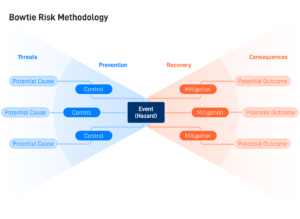
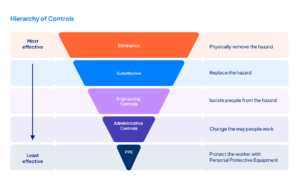
The most effective way to safety manage contractors is to identify, establish and implement a set of complex controls that reduce the risk of a contractor experiencing a work-related injury. Job Hazard Analyses (JHAs), risk assessments, inspections and audits should be performed to identify hazards involved in contractors’ tasks.
Employers should regularly monitor their contractors’ performance and ensure that safety requirements are met. They should also engage in regular dialogue with contractors to ensure that they’re engaged in their work and provide any necessary feedback that could help them improve their performance. If there are any areas in which contractors are not meeting these requirements, your company can then provide additional safety training.
Want a see this contractor management program in action?
See the management lifecycle that thoroughly maintains contractor safety from pre-qualification to performace review.
One of the most common issues is relying too heavily on prequalification questionnaires (PQQs). While PQQs can help screen vendors, they are static and often outdated the moment they are submitted. They provide a snapshot of capability, not a reflection of how work is actually carried out on site. Without ongoing verification, organizations risk approving contractors who look compliant on paper but deviate in practice.
Another challenge is inconsistent onboarding. Contractors may receive different levels of training depending on the site, project timeline or supervisor. This creates gaps in hazard awareness and reporting expectations, particularly when contractors move between locations.
Many organizations lack real-time insight into contractor activities, which makes it difficult to identify unsafe behaviors or intervene early. Issues are often discovered only after an incident occurs.
Additional challenges include:
Addressing these challenges requires moving beyond documentation-based oversight to a more continuous lifecycle approach that consistently tracks contractor performance.
To evaluate your contractor management program, use a mix of leading and lagging indicators. Lagging indicators reflect outcomes that have already occurred:
Leading indicators help evaluate effectiveness before an incident happens:
Taken together, these metrics help organizations move from reactive management to a more proactive approach where risks are identified, addressed and tracked before they escalate.
Interested in learning more about contractor safety management? Explore our other resources below:

Share
Complete the Following Information To Request Your Resource