

Environmental, health and safety professionals are under constant pressure to protect workers, maintain compliance and support safe operations, often with limited time and resources.
These processes grow harder to manage when organizations rely on manual or fragmented systems. Paper-based processes, spreadsheets and disconnected tools create data silos across departments, making it difficult to see a complete picture of EHS performance. Critical information is often stored in different locations or handled inconsistently, which limits visibility and slows decision-making. Manual processes also require significant time for data entry, validation and reporting, reducing the time EHS professionals can spend on proactive risk prevention.
As your organization grows more complex, you may consider investing in EHS software to help you bring structure and efficiency to your safety program. An EHS software solution creates a single, reliable view of what is happening across your operations.
Consolidating safety processes into a single EHS software platform helps you move away from reactive, manual workflows and toward a proactive approach to health and safety management.
Benefits of EHS software extend far beyond those seen directly by EHS professionals:
When your organization is ready to consolidate your safety processes into a single EHS software platform, you have a range of software vendors to consider. We’ve compiled a list of some of the best options out there.
This list reflects widely evaluated EHS platforms for mid‑market and enterprise organizations based on market presence, capabilities and commonly referenced customer feedback.
Evotix is the top EHS software for organizations that want one connected platform for health, safety, sustainability and environmental management. Recognized as a “Leader” in the 2025 Verdantix Green Quadrant Report, the Evotix platform was designed by safety professionals to deliver a single source of truth and measurable improvements across health and safety performance.
Why Evotix leads the competition:
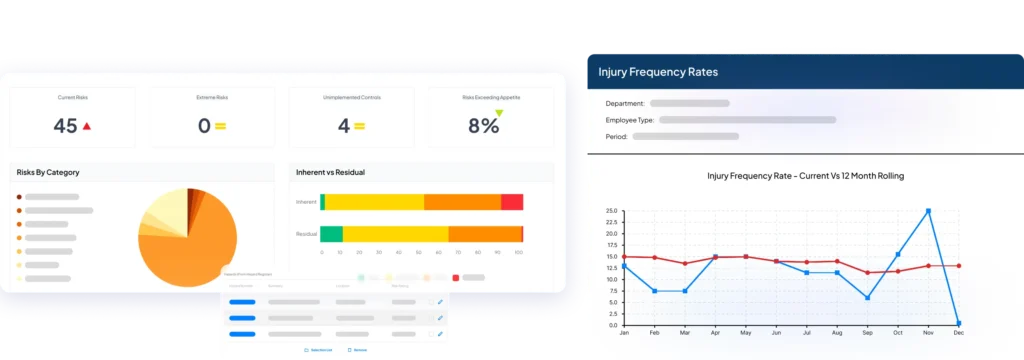
Evotix unifies core EHS functions in one modern platform, so safety data, actions and insights connect across the entire program. Everything runs on a shared data model with no‑code configuration, role‑based permissions and a mobile experience designed for frontline adoption.
Key product features and capabilities:
Best for:
Evotix is best for mid‑market and enterprise organizations that want a scalable, highly configurable EHS platform teams will actually use, especially those operating across multiple sites or regions who need a consistent yet flexible system.
Praise from customers :
“It was blatantly obvious from the beginning that Evotix was head-and-shoulders above the rest.”
— Matthew Murphy, EHS Supervisor, Sig Sauer
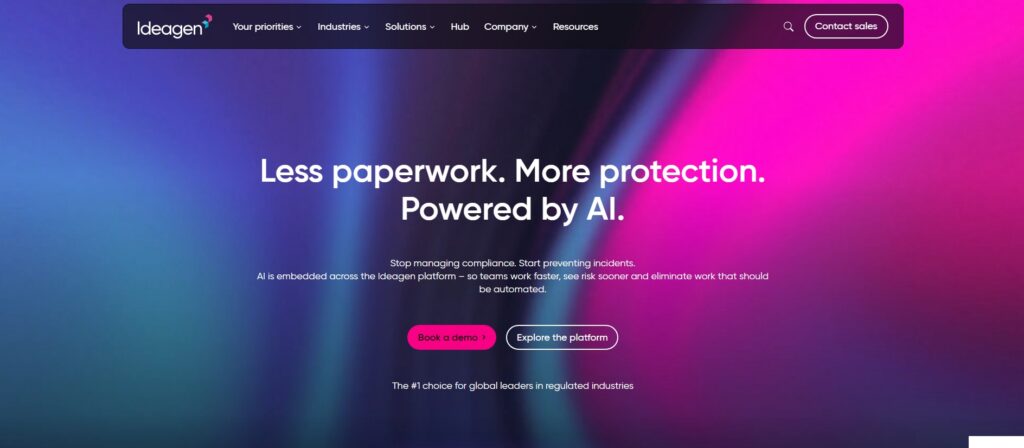
Ideagen provides a broad EHS, quality and compliance platform with coverage that spans document control, enterprise risk, internal audit, GRC and carbon accounting. The company has expanded capabilities through ongoing acquisitions and has recently introduced AI agents across its suite.
Strengths:
Ideagen’s appeal is breadth across compliance domains and options for organizations that want EHS integrated with quality and risk functions. The platform emphasizes unified visibility and mobile access with features that surface information across processes.
Key features:
Praise from customers:
“Has Ideagen delivered everything we hoped? Absolutely. It is an excellent product for us and has really helped us ensure that we can maintain high and consistent quality standards in all the work that we do.”
— Nigel Burbidge, Partner & Global Head of Risk Advisory Services, BDO
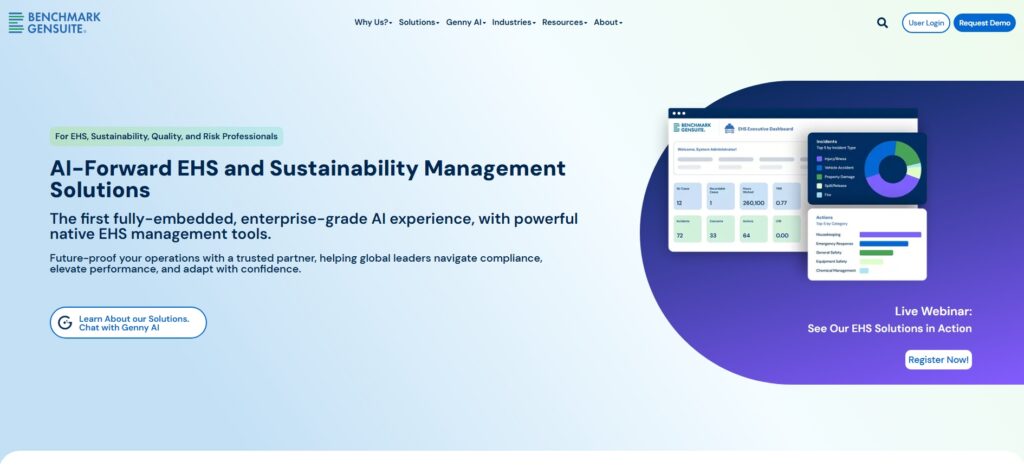
Benchmark Gensuite is a long-standing EHS provider with an emphasis on AI features and support for global, medium-to-high‐risk industries. The platform is offered as cloud software with flexible configurations and a la carte applications.
Strengths:
Benchmark focuses on practical deployment options and a modular approach, so organizations can implement what they need and scale over time. The platform highlights unified data sharing across solutions and integrated AI tools.
Key features:
Praise from customers:
“The experience I’ve had working with Benchmark Gensuite has been absolutely fantastic! It is a great group of people who are excited about working with subscribers. They provide a positive collaborative relationship.”
— Robert Hodge, VP, Global Safety, Health & Environment, Ineos Styrolution
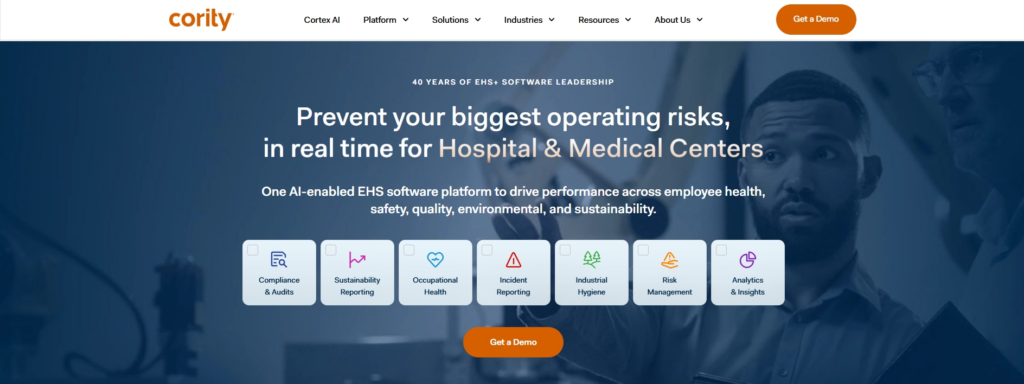
Cority (formerly Medgate) is an EHSQ platform known for their broad offering of modules and deep occupational health capabilities. CorityOne covers safety, environmental, product stewardship and quality, with recognized strength in OH/IH.
Strengths:
Cority emphasizes comprehensive coverage across safety, health and environmental domains with a unified, no-code platform. The software includes tools for health surveillance, exposure tracking and clinical workflows and supports reporting with BI features.
Key features:
Praise from customers:
“I can’t overstate the value of Cority’s expert knowledge and coaching. Our previous vendor had … IT people. The Cority experts have so much experience and are committed to your success.”
— Dr. Sara Pasqualoni, Medical Director, Los Alamos National Laboratory
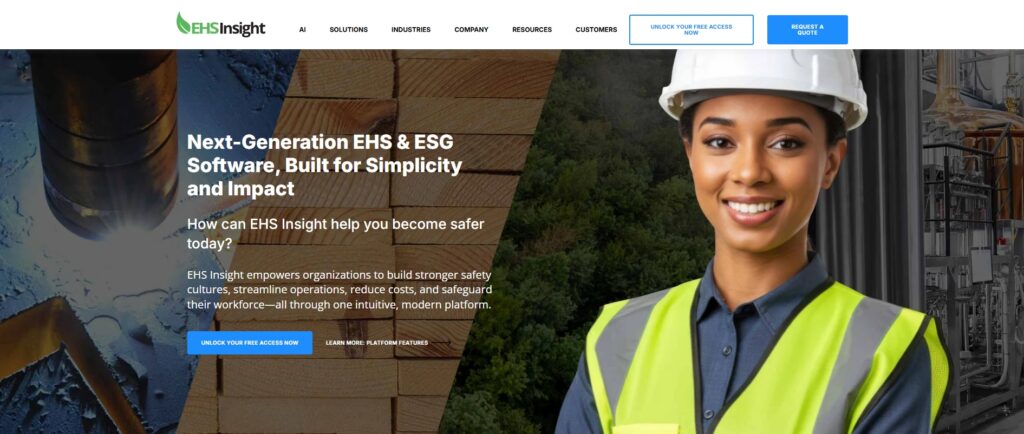
EHS Insight is a cloud‑based EHS and safety management platform designed to support organizations in managing incidents, audits, risk and compliance through a single system. The platform is built for both field and office use, with mobile access and offline functionality to support inspections, reporting and data capture across sites.
Strengths:
EHS Insight emphasizes usability and flexibility, with configurable workflows that allow organizations to adapt safety processes to their operational needs. The platform highlights mobile‑first access, real‑time dashboards and integrated reporting to help teams track safety performance and compliance activity.
Key features:
Praise from customers:
“With three years of utilization within our organization, we have been able to move over 40 paper-based processes into electronic workflows, allowing for more streamlined and efficient processes.”
— Nicholas Owens, Vice President, HSE Bristol Bay Industrial
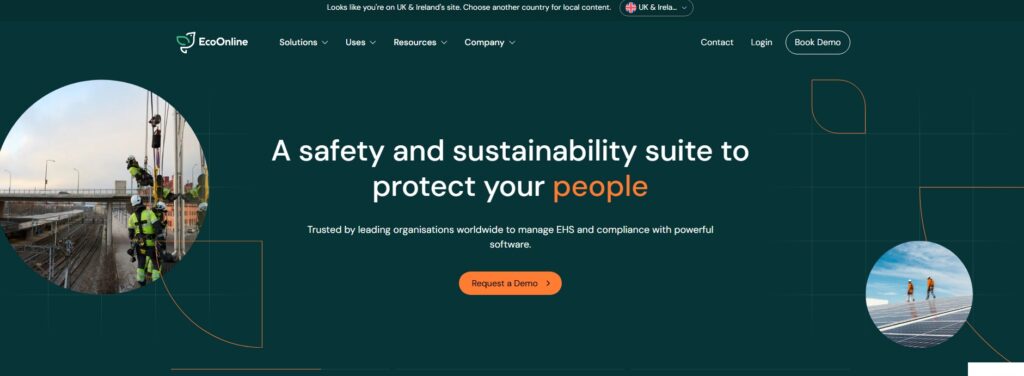
EcoOnline is a UK‑based EHSQ platform that has grown through acquisitions to cover safety, chemicals, compliance and ESG. The system offers configurable analytics and dashboards across their suite of EHSQ modules.
Strengths:
EcoOnline emphasizes reducing manual effort through digital workflows while improving visibility into safety performance across sites and teams. Mobile access and configurable modules allow organizations to support both frontline workers and management with consistent safety processes.
Key features:
Praise from customers:
“EcoOnline is simple to use. Everything is now within one portal, we can see all our information in one place. It is easy for our customers to use, making distributing information to them much more effective.”
— Ketil Hansen, Sales and Product Manager, Valvoline Oil A/S
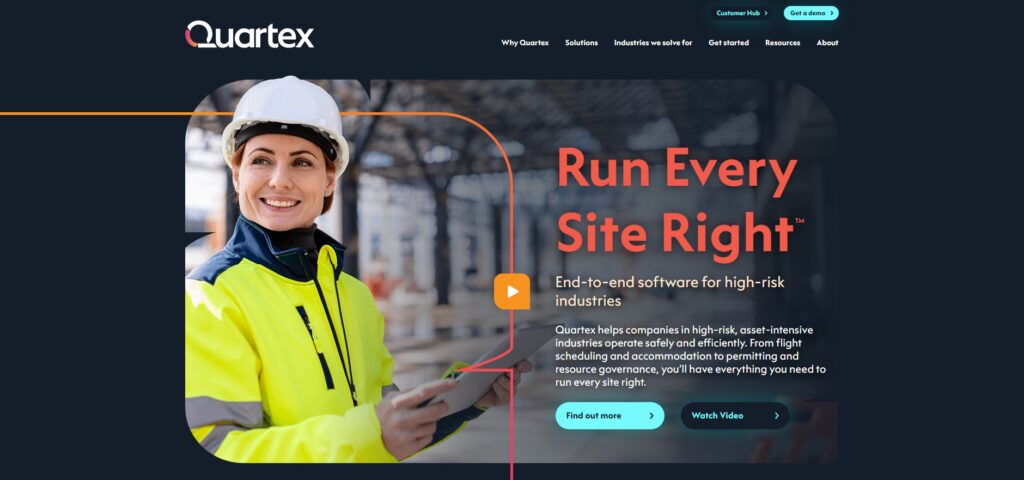
Quartex (formerly INX Software) is an Australia‑based EHS, GRC and workforce management provider with a concentration in high‑risk, asset‑intensive industries. The company offers options for cloud or on‑premise deployment.
Strengths:
Quartex has a strong history supporting organizations in the mining industry and those with capabilities that extend to ESG disclosure and GRC. The platform can be cost‑competitive with flexibility for IT control.
Key features:
Praise from customers:
“We see Quartex’s journey management system as a crucial tool to assist us in meeting our Zero Harm value, which includes monitoring and confirming the safe completion of staff journeys into remote locations.”
— Chris Comyns, GM Global Digital Operations, CR Mining
Enablon is a global EHS, sustainability and operational risk platform for large enterprises. It is part of Wolters Kluwer and known for configurability and scale with integrated risk and sustainability features.
Strengths:
Enablon provides an enterprise-level EHSQ and sustainability platform designed to manage safety, environmental performance, operational risk and ESG data. Its scale and configurability make it suitable for organizations managing complex operations and governance requirements.
Key features:
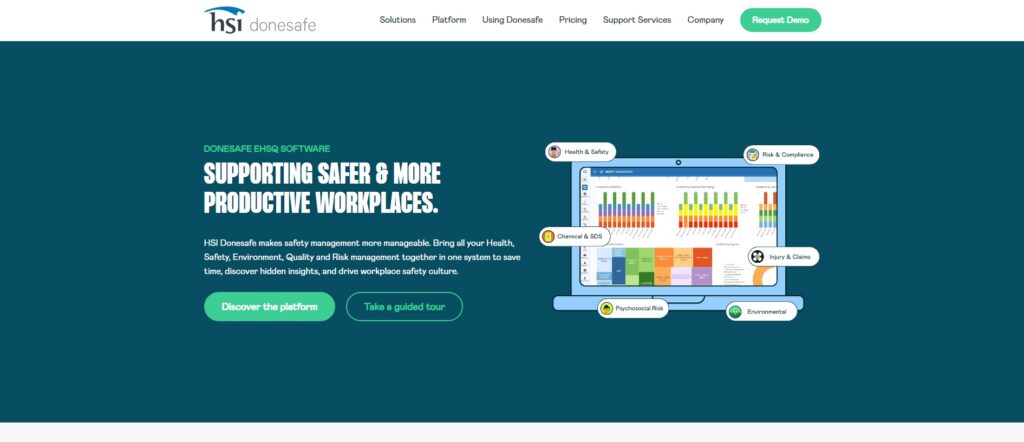
HSI Donesafe is a cloud EHS platform that brings health, safety, environment, quality and risk management together in one system. The software is designed to be configurable and easy to adopt, replacing spreadsheets and disconnected tools with a single platform.
Strengths:
Donesafe emphasizes simplicity for end users and flexibility for administrators, offering no-code configuration so organizations can align forms and workflows to their processes. The platform highlights visibility across programs with dashboards, notifications and mobile access intended to engage frontline workers and leadership.
Key features:
Praise from customers:
“Health and safety is part of the DNA here at Turners. It’s not just about compliance; it’s about ensuring our people are safe and engaged. Since adopting Donesafe, we’ve seen our health and safety scores climb, and that’s been reflected in our overall employee engagement, which is now in the top 5% globally.”
— Greg Hedgepeth, CEO, Turners
KPA provides EHS software and consulting services centered on the Vera Suite platform, with tools for auto dealers and multi‑location operations to streamline safety programs and compliance tasks in a single system.
Strengths:
KPA’s approach combines purpose‑built EHS software with an emphasis on practical usability and program oversight across sites. The platform highlights a mobile app for in‑field reporting, compliance libraries mapped to federal and state requirements, and task management and dashboards.
Key features:
Praise from customers:
“Having a structured and reputable compliance partner like KPA takes away all the guesswork.”
— Chris Simpson, VP of Finance Operations, LAcarGUY
With a wide range of health and safety software providers on the market, choosing the right solution starts with understanding your organization’s specific needs. To help shift through the noise, it is important to evaluate where EHS software will have the biggest impact.
| If your organization… | Look for software with… |
| Operates across multiple sites, regions or business units | Configurable workflows, role-based permissions and hierarchical reporting |
| Relies on spreadsheets, email or paper for incidents, audits and training | Centralized modules, templated forms, mobile data capture (online/offline) and automated notifications |
| Needs faster, more consistent incident response and follow-up | Workflow automation, escalation rules, corrective and preventive actions (CAPA) with owners and due dates and real-time alerts |
| Struggles to get a unified view of performance | Single data model across modules, dashboards and export-ready datasets |
| Has a distributed or remote workforce | Mobile-first UX, offline mode, quick incident capture and multilingual support |
| Wants to elevate frontline engagement and reporting | Guided forms, engaging microlearning and streamlined feedback loops |
Is early in digital transformation and needs fast time-to-value | Preconfigured best-practice workflows, guided implementation, role-based onboarding and admin tools that don’t require heavy IT support |
| Anticipates growth, acquisitions or organizational change | Scalability, flexible org hierarchies, data partitioning and configuration over customization to keep future changes manageable |
Start by selecting the features that best reflect your current pain points and short-term goals. Those rows define your must-have capabilities and provide a clear lens for comparing vendors. From there:
Want to learn more?
Get the full list of software features to consider.
Before you meet with any of the software providers on this list, it’s important to approach your software evaluation with care and preparation. Evaluate how mature your organization is and come prepared with your top needs and priorities. Be prepared to talk about your short-term and long-term goals. Remember, your software provider should grow with your needs and be a constant support for you.
The right EHS software should be one that fits your organization. To talk about your software needs, schedule a call with one of our EHS professionals.

Share