


With growing scrutiny and regulatory mandates, fostering and sustaining a strong and profitable EHS-aware culture has never been more essential. That’s why your organization’s EHS&S program must be at the heart of recalibration to meet new environment, health, safety and sustainability challenges. Otherwise, the consequences of inaction may be damaging.
This starts with investing in the right EHS&S management software solution. The right EHS&S solution will offer cost savings, safeguard the health of your workers and assets, and improve operational productivity.
In this guide, we’ll cover the basis capabilities of EHS software, explore key benefits, discuss software features, outline investment considerations, explain the buying process and equip you with a solid business case.
Environment, health and safety (EHS) software helps organizations manage EHS processes and data in one centralized system. It replaces paper forms, spreadsheets and disconnected tools with digital workflows for activities such as incident reporting, risk assessments, inspections, audits, compliance and corrective actions.
By bringing information together, EHS software gives organizations a clearer view of performance across sites. It can also automate routine tasks, improve data accuracy and help employees report hazards or complete assigned activities wherever work takes place.
EHS software may be delivered in several ways:
For many organizations, SaaS offers a practical way to introduce EHS software without maintaining additional infrastructure. However, the right approach will depend on existing systems, IT resources, security requirements and the complexity of the organization.
Most platforms offer the following health, safety, environmental and sustainability components:
| Component | Purpose |
| Audits & Inspection Management | Creates a central record for audit preparation and follow-up. |
| Chemical & SDS Management | Maintains chemical inventories and provides access to current safety data sheets. |
| Case Management | Manages occupational injury and illness cases from initial reporting through treatment, restricted work and return to work. |
| Compliance Management | Tracks legal, regulatory and internal obligations across locations. Automated reminders and task assignments help teams monitor deadlines and maintain evidence of compliance. |
| Contractor Safety Management | Supports contractor prequalification, onboarding, training and performance monitoring. |
| Control of Work |
Coordinates high-risk work by connecting hazards, controls, approvals and related activities. It provides greater oversight of the conditions under which work is planned and completed. |
| Emissions Management |
Support regulatory reporting, target tracking and environmental performance analysis. |
| Hazardous Waste Management |
Tracks the generation, storage, movement and disposal of hazardous waste. |
| Industrial Hygiene |
Manages exposure assessments, sampling plans and monitoring data for hazards such as noise, dust and chemicals. |
| Incident Management |
Stores reported incidents, injuries, illnesses, near misses and observations. It can also guide investigations, root cause analysis, corrective actions and regulatory reporting. |
| Permit to Work |
Digitizes the authorization of tasks such as hot work, confined space entry and electrical work. |
| Process Safety Management |
Supports the management of risks associated with hazardous processes and materials. |
| Occupational Health |
Manages employee health programs such as medical surveillance, fitness-for-work assessments and health records. |
| Risk Management |
Provides a consistent way to identify hazards, assess risk and assign controls. |
| Sustainability & ESG Management |
Collects and reports data related to areas such as energy, emissions, water, waste and other sustainability measures. |
EHS software is most valuable for organizations that manage complex risks, large amounts of EHS data or operations across multiple sites. This commonly includes organizations in:
Mid-sized and enterprise organizations often have the clearest need because they must coordinate EHS processes across more workers, sites, business units and regulatory jurisdictions. However, company size should not be the only deciding factor.
Your organization may be ready for EHS software if it:
The EHS and sustainability management function is a strategic partner to the business: it connects your company’s EHS&S strategies to business outcomes such as revenue performance, brand image, employee satisfaction, retention and productivity.
Technology allows your EHS and sustainability program to move from compliance-focused practices to an optimized state where EHS&S is embedded in daily operations. Adopting EHS&S software can free users from the burden of manual data collection processes, observations and reporting that often come with paper-based safety management programs and disparate legacy systems.
With streamlined, automated and fully mobile workflows, EHS&S software can surface powerful insights that allow your team to respond quickly and efficiently to reduce risks. A fully integrated software solution can also automate your EHS&S process with minimal overhead and costs to empower you and the team to continue innovating and focusing on making operations productive and sustainable.
The benefits of implementing EHS software extend far beyond the health and safety department. The organizational benefits of health and safety software include, but are not limited to, the following:
| Business challenge or opportunity | Benefits |
| Unplanned downtime | Reduce cost and production losses associated with disruptive events that have not been foreseen. EHS&S professionals spend a lot of their time preventing worst-case scenarios, such as fatalities. Technology can help outline these as the extreme events that need to be avoided. |
| Regulatory compliance |
Reduce fines and penalties due to fewer violations of EHS&S rules and regulations, especially in a continually changing and evolving landscape. Minimize legal and financial exposure and protect brand reputation by meeting regulatory compliance. Use accurate data to report to regulators in a timely manner, improving audit trails. |
| IT risks and costs |
Reduce license and maintenance costs associated with outdated systems. Reduce risks of IT security incidents with outdated and unsupported systems. |
| Process efficiency | Eliminate manual steps in processes and reduce the time taken to investigate, review and approve records. Drive accountability with automated task assignments and tracking. |
| Workers’ compensation costs, illnesses and injuries |
Reduce costs associated with days away from work (absenteeism) and injury management by decreasing the likelihood and severity of injuries and illnesses in the workplace. |
| Data accuracy and reporting |
Reduce manual effort and time to manage EHS&S processes by collecting and consolidating data for company reporting and regulatory reporting. Eliminate effort in verification and cleansing of data required for reporting. |
|
Worker satisfaction and engagement |
Improve productivity and keep workers safe and well with an easily accessible way for employees to engage and provide feedback. |
| EHS and business performance improvements |
Benefits include opportunities to identify overall business performance improvements, including operational savings, using data insights derived from the technology. |
| Change management |
Manage operational changes with an automated process to safeguard against safety disasters. Reduce time spent on manual MOC data complication processes and experience substantial savings. |
High-risk work often involves multiple hazards, work groups, contractors and approvals. Without a structured way to manage all related processes, critical information can be missed and workers may operate with incomplete knowledge of site conditions.
A long list of features does not necessarily make a platform the right choice. Buyers should evaluate how well each option fits the organization’s risks, processes, resources and long-term plans.
Use the following list of software capabilities and questions to guide your vendor evaluation:
Buyers should also consider what happens after implementation. A platform may meet today’s requirements but still create long-term challenges if it is difficult to maintain, expensive to change or unable to support new sites and processes.
Once you’ve decided to explore EHS software, a structured evaluation process can help you compare vendors based on what your organization actually needs.
Begin this process before the limitations of your current approach create an urgent operational or compliance problem. If a contract renewal, regulatory deadline or major business change is approaching, allow enough time to assess requirements, compare providers, secure approval and prepare for implementation.
Getting buy-in early from stakeholders is key to success. Evidence suggests that organizations that successfully translate their EHS&S digitalization vision from an aspiration to a working solution follow a process-based approach with cross functional communications and concrete scoping.
Learn more about building the business case for software investment here.
An environment, health, safety and sustainability software provides the flexibility you need to quickly adapt and enable EHS&S programs into becoming more agile, adaptable and resilient.
We hope you utilize this guide to its fullest. Please reach out if we can help you establish a digitalized EHS&S software platform that carries your company through this new normal and beyond.
Want to learn more? For more information, request a demo with one of our EHS specialists.

Share
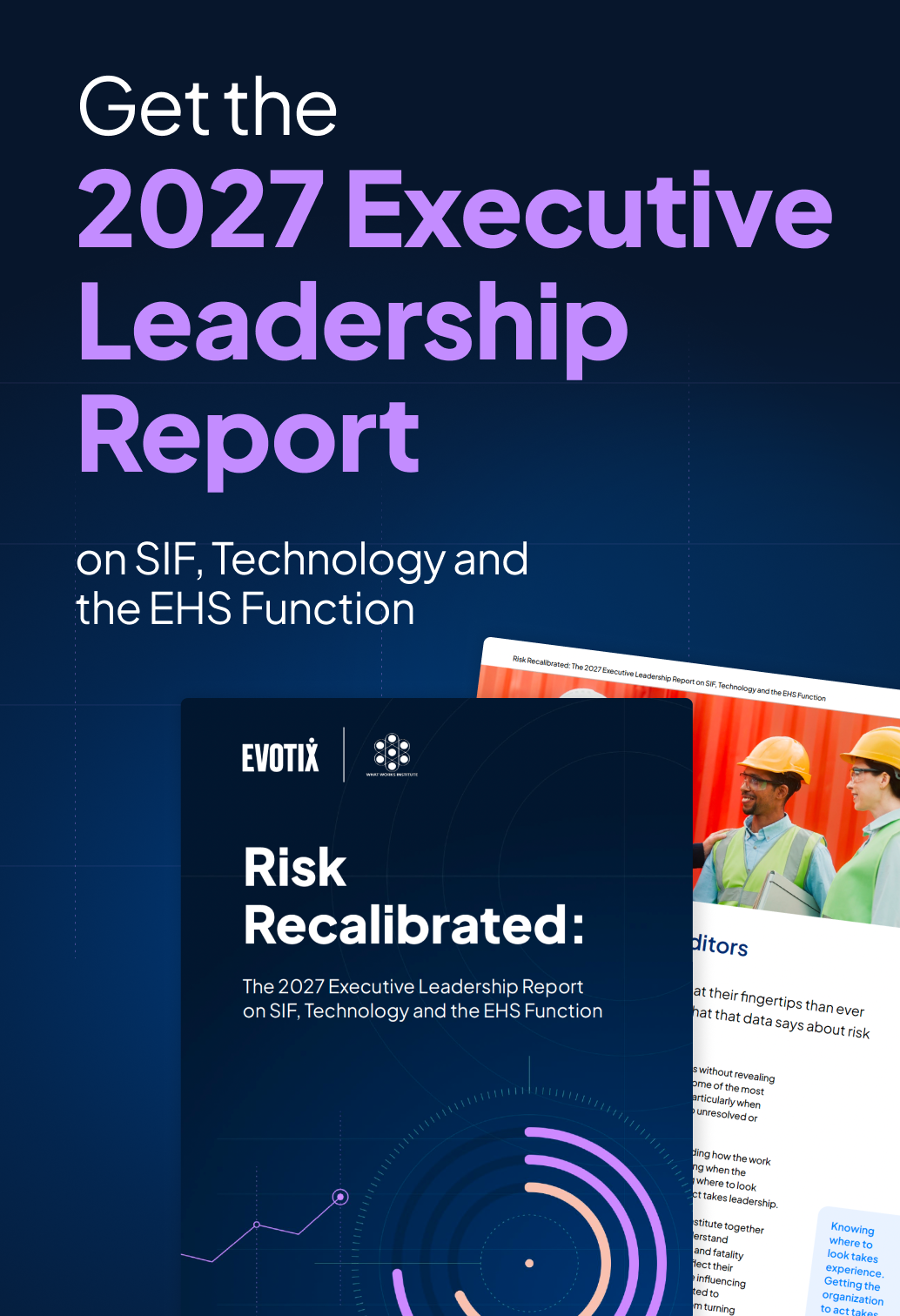
Inside the report, you’ll discover: