

Picture a manufacturer that has just rolled out a new AI-powered EHS platform. The dashboards are clean, the data feeds are live and the system shows risk patterns that used to take weeks to surface manually. Six months in, the EHS director pulls the numbers. Near-miss reporting is down and hazard identification rates haven’t moved. The platform is working, so what gives?
The technology did its job but the culture did not, and no software deployment, however well-designed, can close that gap on its own. Whether you’re deploying a new technology platform, redesigning metrics or building a more mature SIF program, people and culture can make or break an EHS transformation.
This scenario plays out more often than most EHS leaders want to admit and it’s a clear takeaway in Risk Recalibrated: The 2026 Executive Leadership Report on AI, SIF and Human-Centric EHS — a joint research effort from Evotix and the What Works Institute, based on executive roundtable dialogue and survey findings of more than 50 EHS leaders across manufacturing, utilities, construction, aviation and logistics.
Organizations making the most progress on serious injury prevention share a human-centric mindset. No new tool or program succeeds without trust on the frontline and visible executive buy-in. What follows are several practical ways EHS leaders can help shape people and culture for greater overall success in their health and safety programs.
Safety initiatives can pile up over time and create what EHS leaders called a “friction of complexity”. What starts as a focused set of priorities can grow into a long list of programs running in parallel, each with its own rollout, metrics and owners. You’re probably running more than a few right now: behavior-based safety, SIF prevention, near-miss reporting, ergonomics, mental health and well-being, contractor safety. It’s important to prioritize and connect existing efforts so you don’t overwhelm the frontline.
“The antidote is clarity and simplification, built through integration. Consolidate programs under a clear purpose and co-design with the workforce so systems make sense to those who use them.”
-Risk Recalibrated: the 2026 Executive Leadership Report on AI, SIF and Human-Centric EHS
Before you launch anything new, look at what you already have in place. Talk to your frontline workers and supervisors. Ask them which programs feel redundant, which ones they actually use and which ones seem like they’re getting ignored.
From there, find the thread that connects everything under one clear purpose. When workers can see how the pieces fit together, and especially when they have a hand in shaping them, the whole system will get more traction.
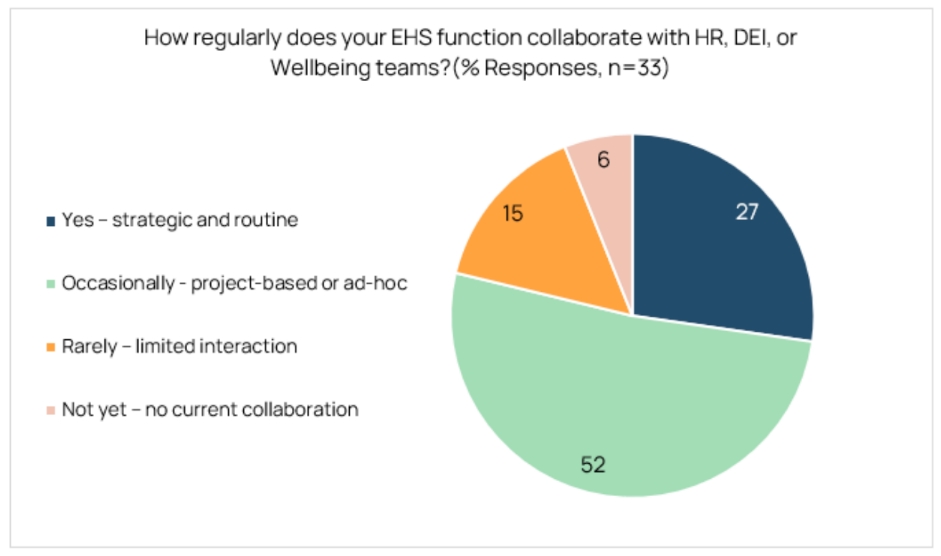
Only 27% of EHS teams report strategic and routine collaboration with HR, DEI or wellbeing functions. About half connect only occasionally while a quarter rarely or never do. Those two functions are looking at the same workforce from different angles. Mental health strain, fatigue and workload pressure all feed into the conditions that lead to serious injuries, and HR is sitting on data that can help you see those patterns earlier.
Start by pairing operational safety data with workforce indicators. Here are a few worth examining:
When ovetime hours spike, near-misses tend to follow — research from PMC shows near-miss likelihood rises significantly once employees cross 41 hours per week. That correlation gives you something concrete to bring into scheduling conversations with operational leaders who might otherwise dismiss the concern.
When an employee is consistently missing work or calling off, that can be a helpful signal that they are feeling stressed or burned out. HR has access to that information, so it’s worth pairing up with your incident reports.
High turnover in high-hazard roles is also worth paying attention to. It can mean you have people in critical jobs who are still getting up to speed on the risks, and your training investment may not be keeping pace with that churn.
These conversations become possible when EHS and HR data connects.
Knowing the silo problem exists is one thing, but fixing it is a more difficult challenge. Build habits and structures that make cross-functional visibility a normal part of how you operate. Here are four things EHS leaders we surveyed have done that you can implement too:
Bring together safety, operations, maintenance, HR and finance in a standing group that reviews both safety performance and business decisions that shift risk. When a production change or scheduling decision increases exposure, EHS needs to be in that conversation before the decision is made, not after something goes wrong.
Several organizations consolidated multiple program-specific checklists into one daily review covering physical safety, mental readiness and operational risk together. Workers fill out one form that treats those dimensions as connected. It reduces administrative burden and signals that safety isn’t a separate activity from the work itself.
Expand what observers look for during walkarounds beyond physical hazards to include signs of fatigue, production pressure and rushed handovers. When you log them consistently, you get a clearer picture of working conditions.
Rather than running separate cadences for separate initiatives, consolidate into one regular review that covers safety performance, wellbeing indicators and operational risk together. That will help you reduce meeting load and force the kind of cross-functional conversation that surfaces connections between programs.
Metrics and incentives play a major role in shaping culture. When performance reviews focus primarily on low injury rates, employees can start to read that as a signal that the number is what matters most, not what’s actually happening in the field. That can unintentionally stop them from reporting near-misses or hazards for fear of being blamed.
Ask yourself honest questions about how your current incentive structure actually works in practice:
Many organizations are shifting toward proactive indicators that reward behaviors tied to genuine risk reduction: hazard identification rates, near-miss analysis quality, investigation depth and corrective action closure. The goal should be to reinforce a culture where raising concerns early is recognized as exactly what good safety practice looks like.
Your leaders have a huge impact on how culture is felt throughout the organization. Employees watch what leaders prioritize, what questions they ask and how they respond when risk becomes uncomfortable.
Here are a few ways you can be a more empathetic leader and make your organization safer while doing it:
Where you place serious risk discussions tells the organization what you actually consider most important. Put it first on the agenda, not as the item that gets dropped when time runs short.
Questions about fatigue, workload pressure and equipment concerns show the organization that you are managing risk, not just tracking what has already happened.
How you respond the first time someone reports an uncomfortable safety concern will determine whether people do it again, so keep the door open.
The research found that where this accountability exists, managers started surfacing SIF precursor information proactively. What leaders ask for consistently is what gets reported, resourced and fixed.
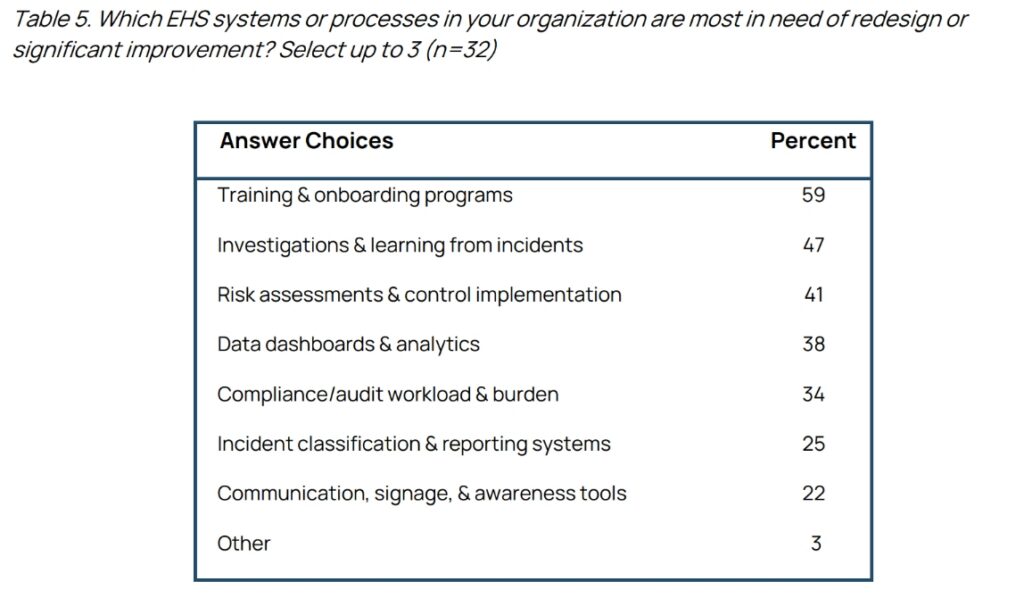
The research asked EHS leaders which of their current systems were most in need of redesign. Training and onboarding topped the list at 59%, followed by investigation processes at 47% and risk assessments at 41%. It’s clear there’s an appetite for systems that generate real learning, drive accountability and make it easier for people to do the right thing under real-world pressure.
Technology continues to play an important role in modern EHS programs. AI, analytics and digital reporting platforms can surface risk patterns faster and provide visibility that wasn’t possible before. But they work best when they sit on top of a culture that already values transparency, learning and collaboration.
The most immediate work is internal. Connect what you already have. Rewire incentives to reward honesty over optics. Make leadership commitment something the organization can see and respond to. Build the kind of culture where people feel safe enough to tell the truth about risk. No platform, however well-designed, can build that part for you.
Want to learn more?
Download the full 2026 Risk Recalibrated report for more insights.

Share