


Incident reporting is the action of recording an incident such as an injury or damage to equipment or property. Incident reporting is often documented on an incident reporting form, which is completed by collecting as much data as possible about the incident that took place.
But what incidents are worth documenting in a report, and what information should be included? We’ll cover all of this information below.
1. Slips, trips and falls: One of the “Fatal Four” leading causes of construction deaths (alongside being struck by equipment and electrocutions), are falls that often occur as a result of bad lighting, slanted flooring, cables and liquid spillages. According to the CDC, such incidents account for 26% of all nonfatal injuries in American workplaces.
2. Struck-by-objects: These types of injuries occur when a worker is hit by an object or piece of equipment that’s falling, rolling, sliding, slipping or swinging – such as books on a shelf or a moving car. Alongside electrocutions, falls and getting caught between objects, struck-by-object incidents account for 60% of all construction-related deaths.
3. Electrocutions: Electrocutions are also a common incident to watch for. While the Electrical Safety Foundation International noted a 24% decrease in fatal electrical injuries over 2020, nonfatal electrical injuries rose by 17% over the same period – suggesting that more businesses need to take additional precautions to protect their employees from electrical hazards.
4. Near misses: A near miss is an incident that, while not actually causing injury, has the potential to cause harm. Research has shown that for every 90 near miss incidents that take place, an accident will occur.
5. Overexertion: Overexertion injuries, including strains from lifting, pushing or repetitive motion, are the leading cause of nonfatal workplace injuries involving days away from work and often point to ergonomic gaps or workflow design issues. According to BLS data, overexertion accounted for nearly 500,000 cases with days away from work in 2023–2024, signaling a need for better task design and early intervention.
6. Cuts, lacerations and puncture wounds: Often viewed as “minor,” cuts and lacerations should still be reported because they can indicate tool condition issues, poor PPE use or unsafe work practices.
7. Environmental or property damage: Spills, releases or structural damage events should be reported because they often precede personal injury or regulatory violations. Near-miss environmental incidents can signal systemic risk.
8. Workplace violence or threats: This includes physical assaults, verbal threats or harassment that creates a safety risk, even if no injury occurs.
9. Equipment or tool failures: Incidents involving malfunctioning equipment, even when no injury occurs, often signal maintenance or inspection process weaknesses. Reporting these events helps organizations move from reactive repairs to proactive asset reliability and injury prevention.
10. Exposure to harmful substances: Incidents involving chemical exposure, oxygen-deficient spaces or extreme temperatures should always be reported, even if symptoms do not appear immediately. These incidents can indicate chronic health risks and regulatory noncompliance.
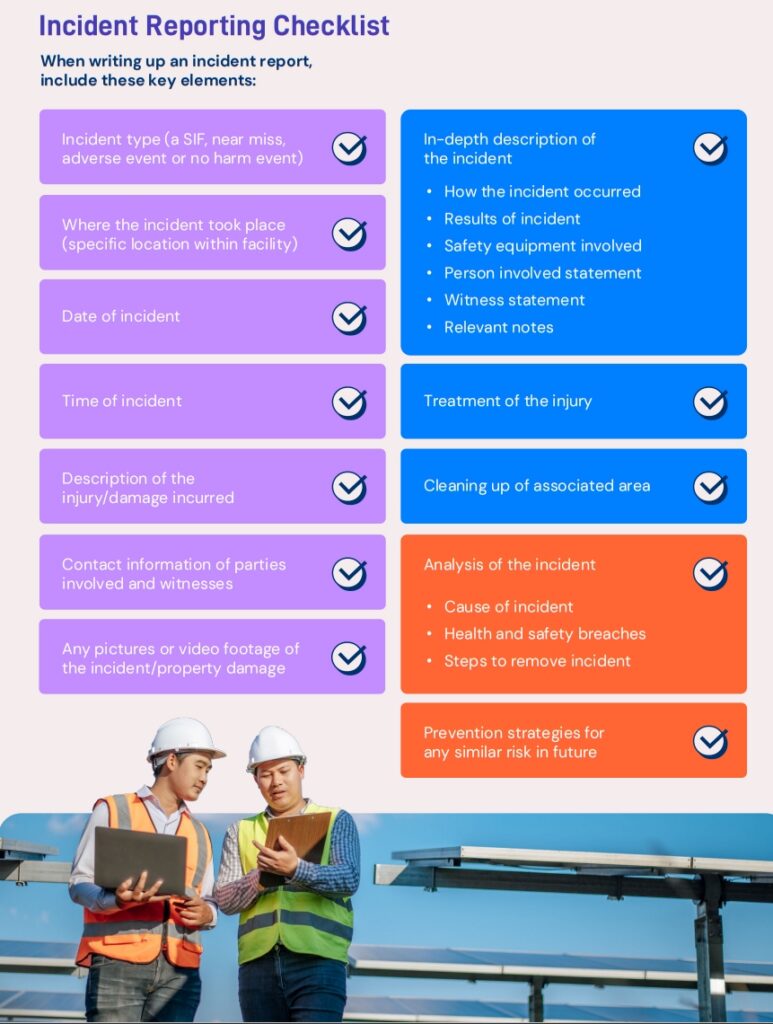
When writing up an incident report, there are several key details to record. Keep in mind that the specifics may vary, but in general should include:
This data must comprise cold, hard facts rather than fluffy opinions or biased statements about what happened. Recording detailed information in this way protects organizations when it comes to inspections and insurance claims, and also helps prevent the incident from repeating itself again.
Once an incident report is filled out, an investigation into the incident is conducted. This is then followed by the roll-out of preventative safety measures or staff training to ensure similar incidents don’t occur in future. This process is beneficial for the following reasons:
By proactively reporting incidents and near misses, companies can put mechanisms in place to mitigate these incidents before they endanger or harm another employee. Such strategies may include reviewing SIF (serious, injury and fatality) incidents to ensure they’re reduced
Regular reporting of incidents can ensure that an organization stays on top of safety risks every day. By encouraging all workers – whether on the factory floor or senior management – to report incidents across the spaces they’re working in, all areas of the workplace are covered. This helps cultivate a collective understanding of the diverse risks that can appear across different areas of the business.
Reporting of incidents also helps to ensure you’re staying compliant with the regulations. Organizations without a sufficient incident reporting mechanism risk being penalized. In the US, OSHA requires that employers report fatalities within 8 hours, and severe injuries including in-patient hospitalization, amputation or eye loss within 24 hours.
The consequences of not reporting depend on the seriousness of the incident, but penalties can range from fines imposed on the business, to up to two years imprisonment for the person (or people) responsible for the incident. Incidentally, by regularly reporting these incidents, you’ll be able to get a better grasp on the key health and safety challenges facing your workforce and where to focus your attention.
Besides reputational damage, companies that fail to adequately report accidents stand to lose financially, too. The higher the incident rate, the more costs incurred for the business – with the total cost of workplace injuries costing US businesses $163.9 billion in 2020.
Proactive reporting helps organizations create a culture of engagement and further promote all things health and safety. The benefits of creating a positive culture are plentiful, including, of course, the reduction of actual incidents.
Having well-trained employees who are knowledgeable on the risks in their workplace also decreases the chance of productivity being stalled should an incident occur, as they’ll know how to handle various situations.
Many businesses see a boost in overall employee morale. Feeling safe and secure at work is likely to alleviate stress, meaning employees are able to carry out their duties more effectively. Having a good safety record is also great for your reputation, giving you a bigger pool of qualified candidates to recruit, as well as making your existing employees more likely to stick around.
Creating a culture of reporting has the impact of continuously promoting active engagement around an organization. As employees share best practices and learn from each other’s experiences, they can help boost their own well-being through a greater understanding of incidents and how to prevent them.
A positive reporting mindset helps establish a workplace of camaraderie, understanding and partnerships – decreasing the risk of employees developing mental health problems as a result of feeling unsafe or isolated at work.
Required to submit OSHA 300, 300A or 301?
We’ve got the checklist to make your reporting seamless and straightforward.

Share