Sadly, heat is a major hazard that can cause serious or even fatal illness to employees if proper precautions are not considered. Whether indoors or outdoors, heat-related illnesses can wreak havoc on people’s health and safety. In 2022, the National Safety Council’s (NSC) Injury Facts found 180 deaths caused by extreme heat. Additionally, the Bureau of Labor Statistics (BLS) reported 43 fatalities specifically due to environmental heat, with an 18.6 percent increase in fatalities due to exposure to temperature extremes. And these numbers aren’t counting the thousands of people that feel ill and aren’t able to finish their daily job due to occupational heat exposure.
While we can’t completely eliminate the hazard of heat, there are precautions we can implement to reduce the risk of heat-related illnesses. We’ve gathered our top tips you help keep your employees safe and beat the heat.
How To Stay Cool in Hot Working Environments
#1. Make sure employees stay cool and comfortable
Don’t wait until you are thirsty: encourage employees to stay hydrated. Make water and cold drinks available, and make sure employees are getting enough fluids and electrolytes throughout the day.
#2. Limit PPE (where allowed)
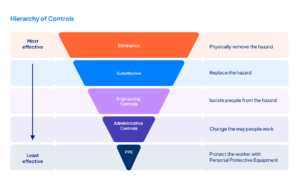
If your employees need to wear PPE that makes it harder to stay cool, it may be worth considering if there are other controls that can effectively reduce or eliminate the hazard. Can the task be postponed, or carried out at a cooler time of the day?
#3. Reduce dangerous sun exposure
UV exposure is the main preventable cause of skin cancer. If you have employees who work outdoors, make sure they:
- Keep covered up: Long-sleeved shirts, hats and eye protection should be the first lines of defense
- Avoid the sun at its strongest: Just 10 minutes of exposure is all it takes to burn, so, if possible, stay in the shade between 11am and 3pm
- Use and reapply sunscreen: Ideally use a sun protection factor (SPF) at least SPF30 with a UVA rating of at least four stars
#4. Watch for heat exhaustion and heatstroke
There are several heat-related illnesses to be aware of, including rhabdomyolysis, heat rash, heat syncope, heat cramps, heat exhaustion and heat stroke.
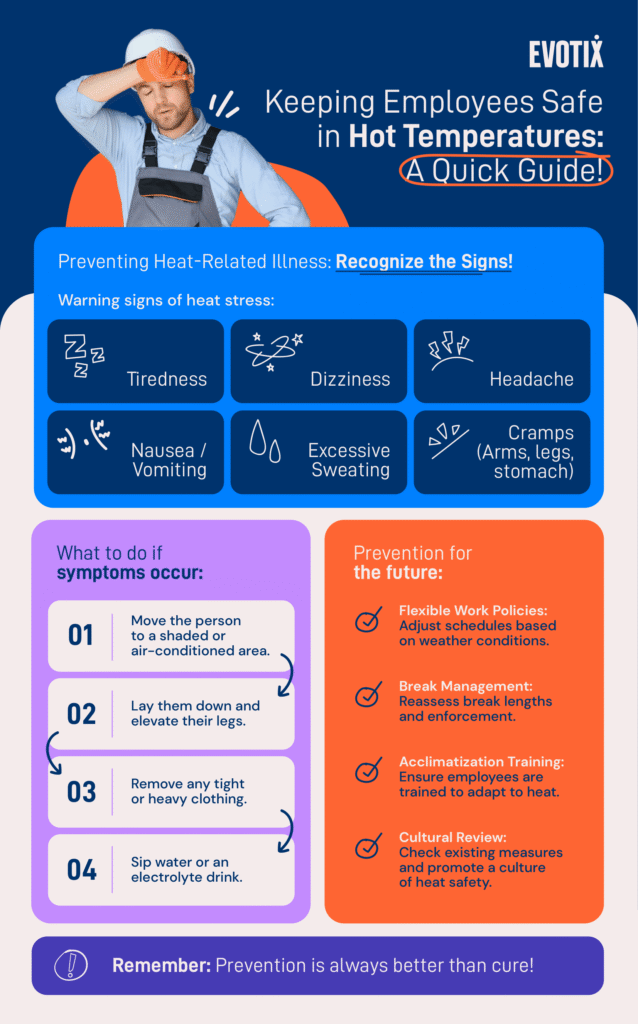
Heat exhaustion and heatstroke are serious and can be deadly. Symptoms of heat exhaustion can include headaches, dizziness, nausea or vomiting, pale skin, heavy sweating and a high temperature.
If you suspect heatstroke, take the following action:
Find a cool place and loosen tight clothes
Drink plenty of fluids (water is best)
Apply cold sponges or clothes soaked in cold water to exposed skin
Heat exhaustion can normally be resolved by getting into the cool and re-hydrating, but heatstroke is a life-threatening condition. If you or an employee experience the following symptoms, call emergency services immediately:
Headaches
Hot and red skin
Nausea
Intense thirst
Raised temperature
Confusion
Aggression
Loss of consciousness
#5. Be flexible
When the weather or working environment gets especially hot, take a flexible approach to work practices. Consider rescheduling meetings for the morning, when temperatures are cooler and energy levels are higher. If possible, make temporary changes to working hours to help employees to avoid the worst of the heat.
Also, accept that strenuous work will take longer than usual, and factor this into your work schedules. It’s important to allow employees to take regular rest breaks, especially if they’re carrying out physical tasks or are outdoors.
#6. Train your workforce
Ensure your workforce is properly training in identifying symptoms of heat-related illnesses. Print out the following flyer and place it around the workplace to keep your workforce aware and viligent.
Spot the warning signs before it’s too late.
Use this checklist to identify heat risks early and take action.